
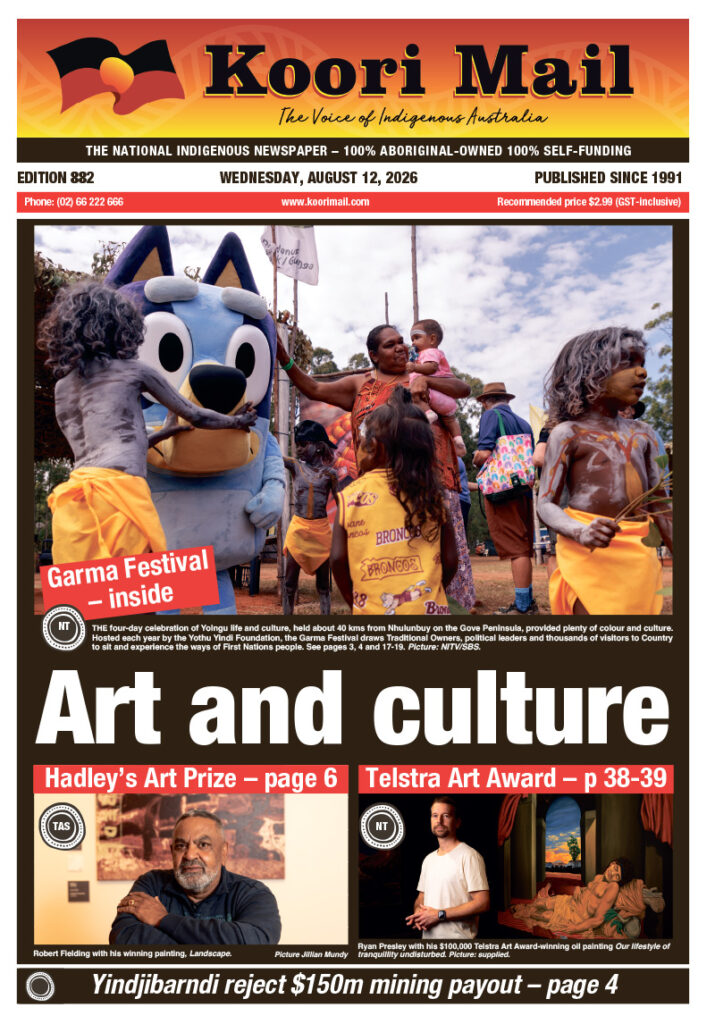
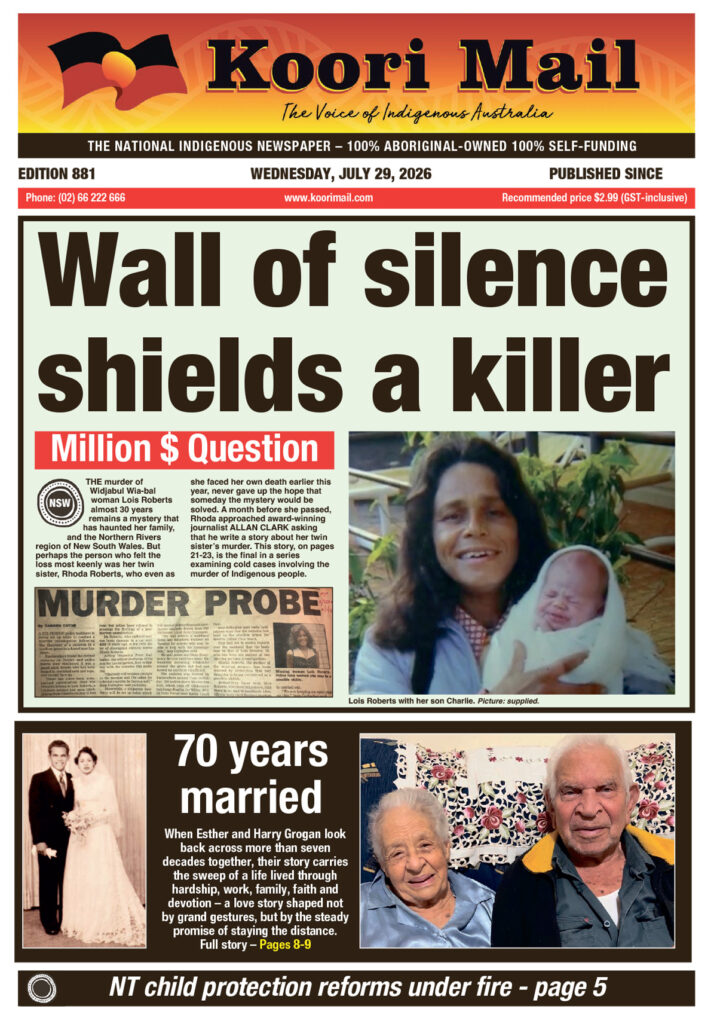
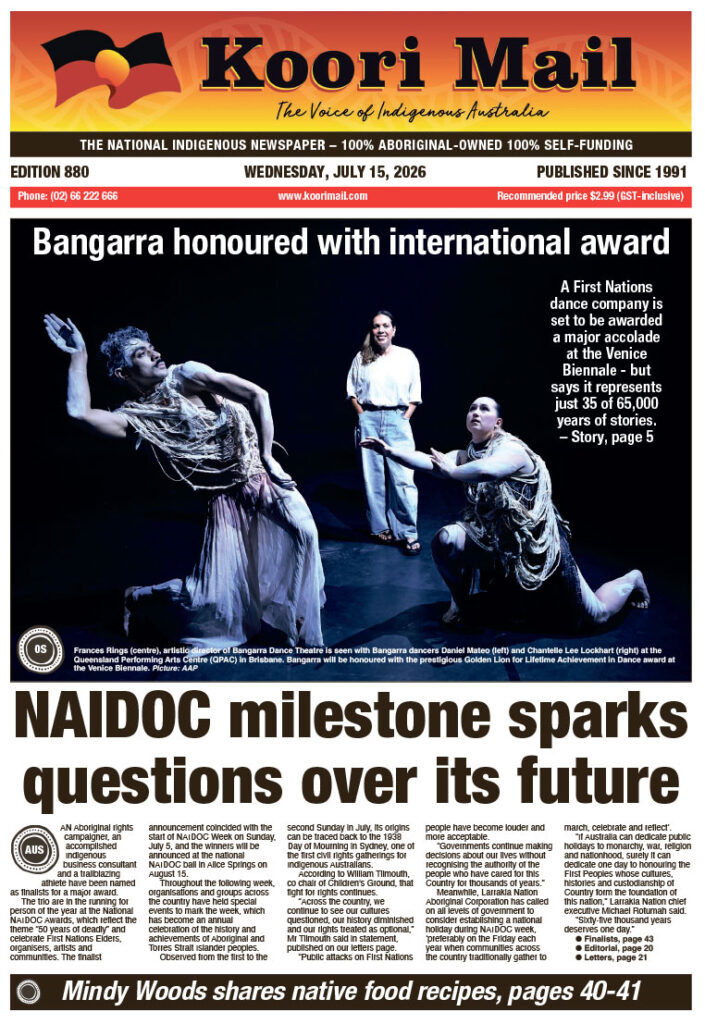
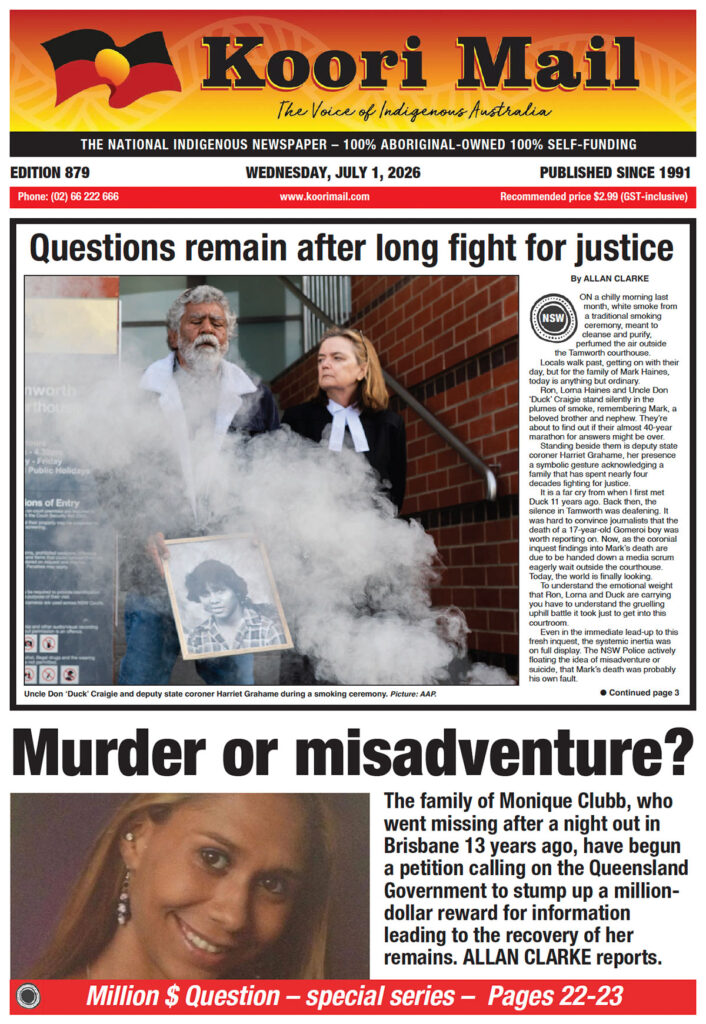
NEW edition out on Wednesday

NSW: This year will mark 23 years since Bigambul grandmother, Theresa Binge, was brutally murdered near Goondiwindi, NSW. Her family are calling for anyone with information to come forward. This is the first report in a series examining cold cases by award-winning journalist Allan Clarke.

AUS: A national research project has delivered a framework for how species and ecosystems of deep cultural importance to Indigenous Australians should be recognised in environmental policy and conservation.

AUS: It’s been 35 years since a landmark report on Aboriginal deaths in custody, yet Indigenous Australians remain among the world’s most incarcerated people. Since the release of its final report, more than 630 Aboriginal and Torres Strait Islander people have died in the custody of police or corrective services. Official figures show 33 Indigenous deaths in custody across the nation in 2024/25, the highest number since 1979/80.

NSW: A lizard known to Wiimpatja Aboriginal Owners as Kungaka “the Hidden One” has been formally described as a new species, acknowledged in research published today in Zootaxa. With fewer than 20 individuals of the species known to exist, the Kungaka is also now one of Australia’s most threatened reptiles.

AUS: The Koori Mail’s April mid-year higher education feature is your guide to Aboriginal and Torres Strait Islander higher education. Stories from institutes across Australia celebrating the journeys of First Nations students, sharing their successes and growth, and demonstrating how education pathways can unlock opportunity, build confidence and support strong futures.

VIC: ‘One Silly Ring’ a quietly spoken Yarwura and Noongar woman from Broome, clad in a Michael Jackson inspired outfit, has taken out top prize at this year’s Deadly Funny National Grand Final with her deadpan, self-depreciating humour. Also known as Pearl Smith, she was one of eleven First Nations comedians from across so-called Australia who had won or been invited as wildcards from regional Deadly Funny heats to the grandfinal in Naarm/ Melbourne last week.


Latest News Stories

Theresa Binge, centre, with family. Picture: supplied.

Million $ question still remains unanswered

Wednesday, 22 April 2026 4:37 pm

By Allan Clarke

This year will mark 23 years since Bigambul grandmother, Theresa Binge, was brutally murdered near Goondiwindi, NSW. Her family are calling for anyone with information to come forward. This is the first report in a series examining cold cases by award-winning journalist Allan Clarke.

In the heart of Bigambul country in far northern inland NSW, Boomi Road slices through flat unfurling farms and scrubby bushland, it’s isolated and quiet, save for the occasional rumbling truck. 

In July 2003, Derrick Craigie and Dwayne Whiteman were driving their Ute along Boomi Road, looking for someone. They had joined the search for missing Bigambul woman Theresa Binge, who’d been missing for over a week. 

A stormwater culvert under a small bridge catches their eye and they make their way through long grass and muddy ground. They peer into the culvert, two large dark and dank rectangular tunnels, and their blood runs cold.

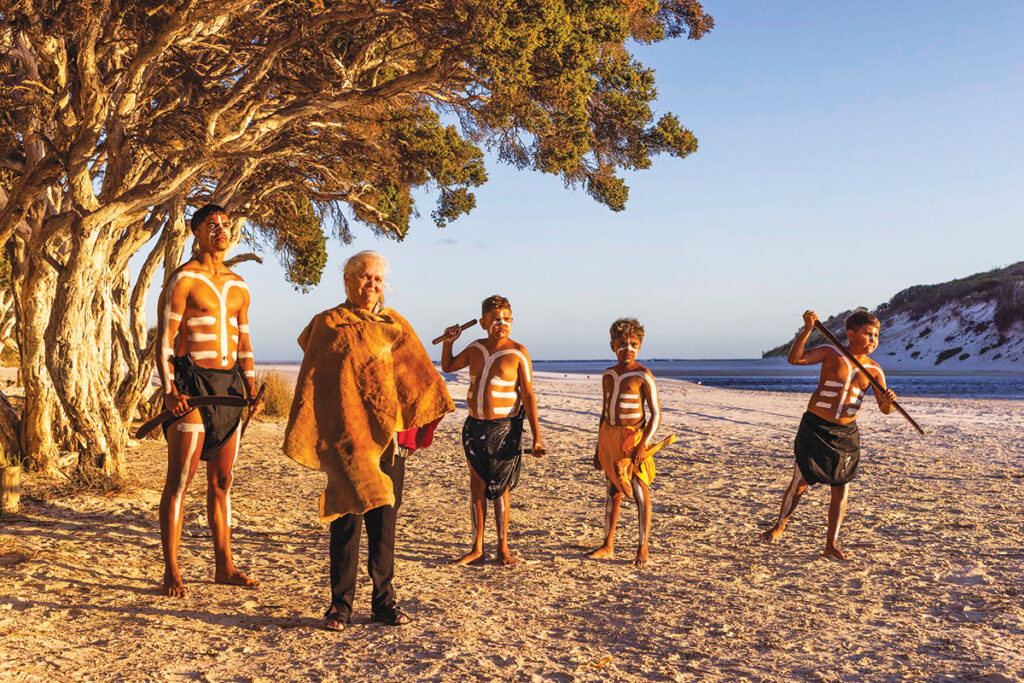
Darrwal/ Wirrigan (dingo) in Bunurong language. Picture: supplied.

Cultural identity framework recognises our totems

Wednesday, 22 April 2026 4:33 pm

A national research project has delivered a framework for how species and ecosystems of deep cultural importance to Indigenous Australians should be recognised in environmental policy and conservation.

The study explored the concept of Culturally Significant Entities (CSE) — animals, plants and ecological communities that are vital to cultural identity, knowledge systems and the health of Country.

Led by Professor Stephen van Leeuwen and Dr Teagan Shields at Curtin University, and funded through the National Environmental Science Program Resilient Landscape Hub, the research establishes a nationally consistent definition of CSE and sets out a pathway to embed Indigenous Knowledge and governance into land and sea management.

“Despite strong cultural importance, Culturally Significant Entities are not recognised in the same systematic way as threatened species under legislation,” Dr Shields said. “The project’s findings call for a shift in how governments engage with Indigenous Australians, from viewing them as stakeholders to recognising them as rights-holders with cultural authority and responsibilities for Country.”

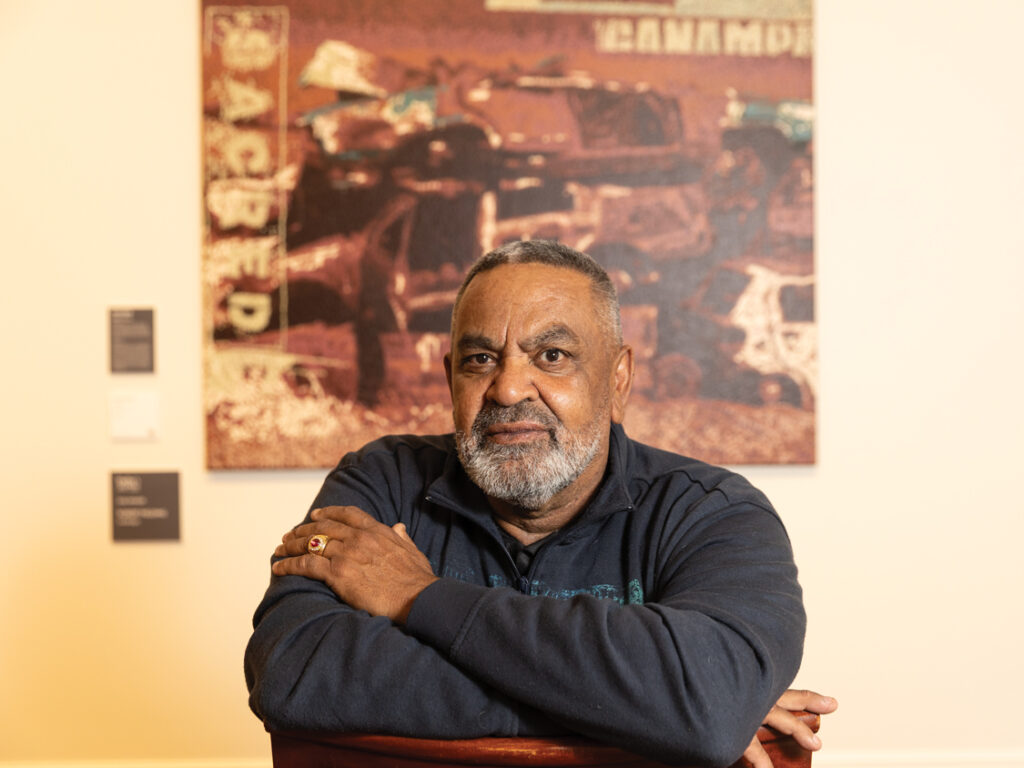
William Tilmouth. Picture: ABC

No anniversary celebrations for death-in-custody report

Wednesday, 22 April 2026 4:30 pm

By Lloyd Jones and AAP

It’s been 35 years since a landmark report on Aboriginal deaths in custody, yet Indigenous Australians remain among the world’s most incarcerated people.

A royal commission in 1991 set out 339 recommendations to address death-in-custody causes and over-representation of First Nations people in the criminal justice system.

It concluded Indigenous Australians had a higher chance of dying in custody simply because they had a higher chance of being put in custody to begin with.

Named for its founding commissioner, Justice James Muirhead QC, the inquiry identified systemic discrimination as the key driver of over-incarceration and recommended alternatives to imprisonment.

But since the release of its final report, more than 630 Aboriginal and Torres Strait Islander people have died in the custody of police or corrective services.

Official figures show 33 Indigenous deaths in custody across the nation in 2024/25, the highest number since 1979/80.

William Tilmouth, co-chair of Indigenous child advocacy group Children’s Ground, says it should be one of Australia’s greatest shames in terms of how it treats First Nations people.

“There’s nothing to celebrate even though it is the 35th anniversary,” he said.

“When they talk about empowerment of Aboriginal people and giving them agency in their lives, that was never achieved.”

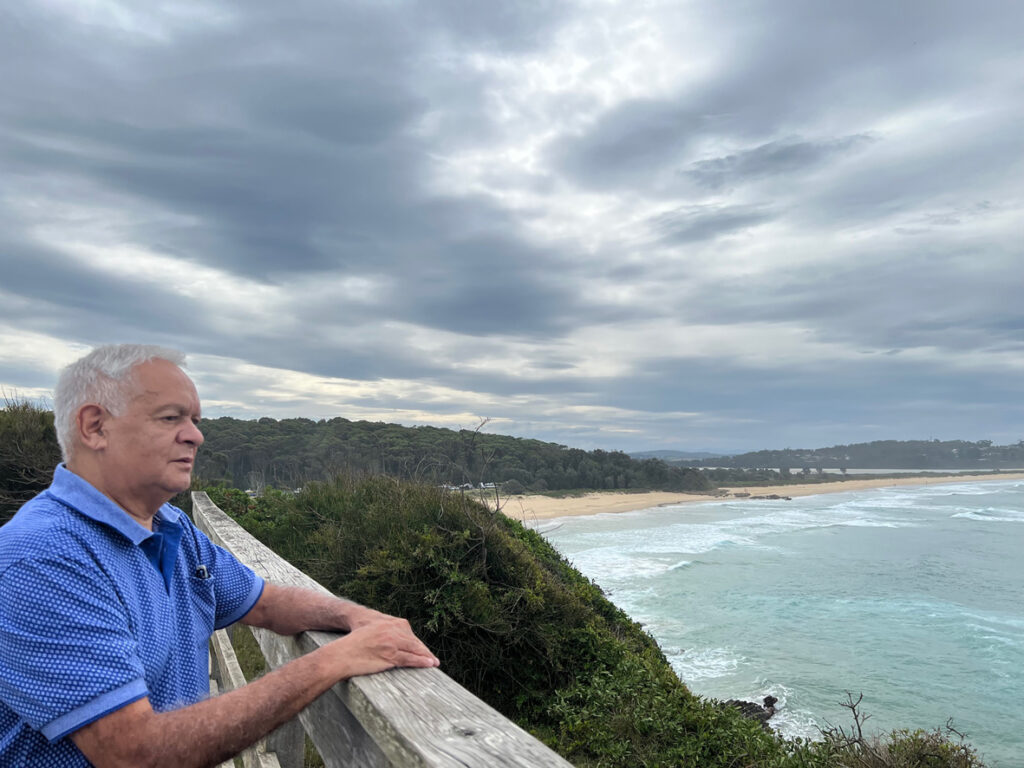
Kungaka, found in Mutawintji National Park, north-east of Broken Hill, NSW. Picture: Tom Parkin

New species Kungaka, ‘the Hidden One’

Wednesday, 22 April 2026 4:27 pm

A lizard known to Wiimpatja Aboriginal Owners as Kungaka “the Hidden One” has been formally described as a new species, acknowledged in research published today in Zootaxa. With fewer than 20 individuals of the species known to exist, the Kungaka is also now one of Australia’s most threatened reptiles.

Through a partnership with Wiimpatja Aboriginal Owners and the NSW National Parks & Wildlife Service (NPWS), scientists from the Australian Museum Research Institute (AMRI), have confirmed the Kungaka (Liopholis mutawintji) is a distinct species found only in Mutawintji National Park, north-east of Broken Hill, in NSW.

Minister for the environment, the Hon. Penny Sharpe MLC, said the discovery of the Kungaka in the rugged gorges of Mutawintji National Park is an exciting moment and a powerful reminder of how much there is still to protect.

“Our conservation efforts are helping identify at-risk species to ensure we act quickly to secure their future,” Ms Sharpe said.

Curator, amphibian and reptile conservation biology at the Australian Museum and UNSW Sydney, Dr Jodi Rowley, said the findings emphasised the value of close collaboration between First Nations custodians, scientific institutions and government departments.

“With potentially fewer than 20 individuals remaining, the Kungaka stands on the brink of extinction. Their survival depends on sustained, long-term collaborative partnerships, and continued monitoring and evaluation. Working with our colleagues, Wiimpatja Aboriginal Owners and NSW government has delivered the important first step in its continued existence,” Dr Rowley said.

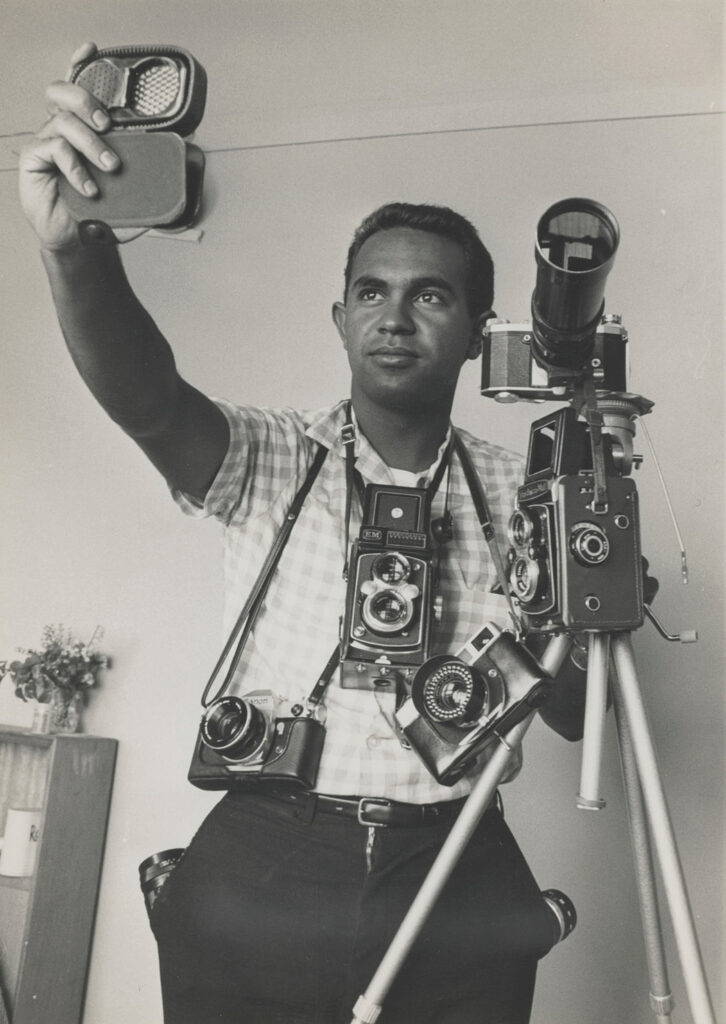
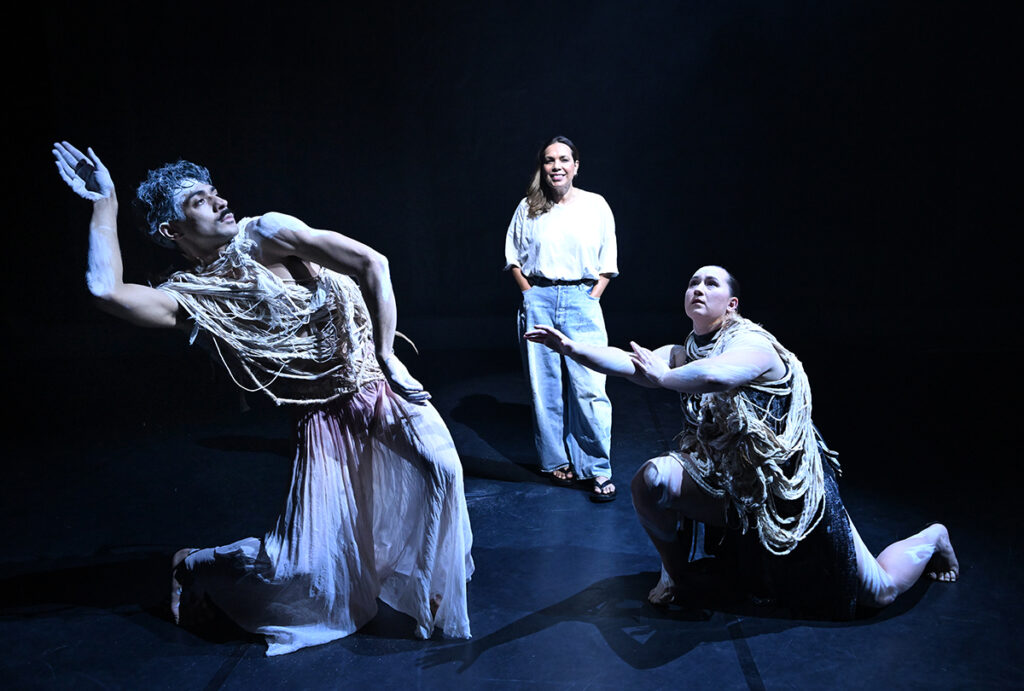
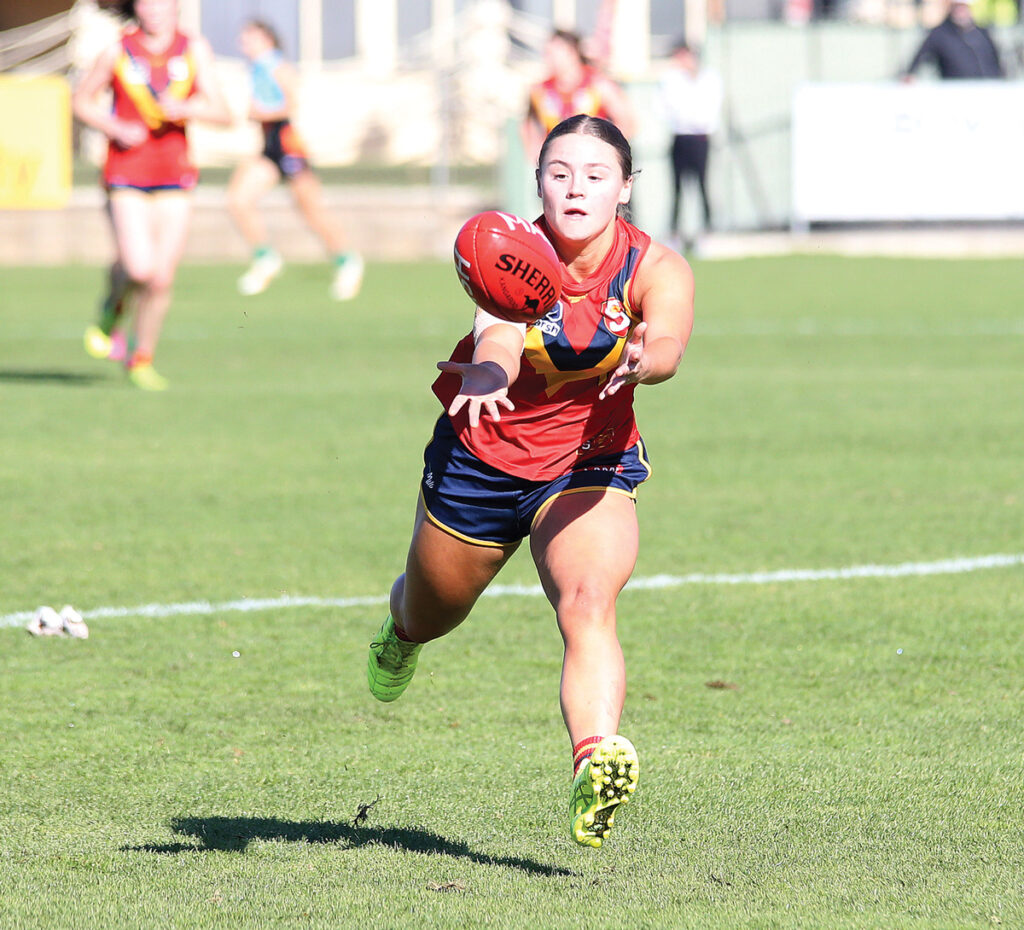
Top row (L-R): Simone Roberts, Floyd Leedie, Taylor Fitzgerald. Bottom (L-R): Aleshia Morris, NIDA students, and Dr Mark Jones. Picture: NIDA students by Brett Boardman. All other pictures: supplied.

Higher education feature

Wednesday, 22 April 2026 4:13 pm

The Koori Mail April mid-year higher education feature is your guide to Aboriginal and Torres Strait Islander higher education.

Stories from institutes across Australia celebrating the journeys of First Nations students, sharing their successes and growth, and demonstrating how education pathways can unlock opportunity, build confidence and support strong futures.

Finalists applaud as a surprised One Silly Ring (Pearl Smith) is announced winner. Picture: Jillian Mundy.

Deadly funny comedy champions 

Wednesday, 22 April 2026 3:41 pm

By Jillian Mundy

‘One Silly Ring’ a quietly spoken Yarwura and Noongar woman from Broome, clad in a Michael Jackson inspired outfit, has taken out top prize at this year’s Deadly Funny National Grand Final with her deadpan, self-depreciating humour.

Also known as Pearl Smith, she was one of eleven First Nations comedians from across so-called Australia who had won or been invited as wildcards from regional Deadly Funny heats to the grandfinal in Naarm/ Melbourne last week.

There were radio hosts, performers, writers and singers looking for a new direction, some who ended up there after being encouraged, or maybe coerced, into having a crack at regional workshops. There was a dancer whose body is apparently held together with scotch tape and one woman who was forty years late for the gig. Whatever their reasons or back story they had a few things in common – deadly, Blak and funny.